The main exhibit of the Bauska Castle Museum is the Bauska Castle itself – a cultural monument of national significance. The exhibitions emphasize the castle’s authentic values: spatial layout, decorative façade finishes (sgraffito and rammed plaster), stone carvings, restored stoves, and tiled floors.
The aim of the exhibitions and displays is to educate the public about Renaissance and Mannerist architecture, art, and military heritage in the context of Bauska Castle, based on the results of scientific research and the museum’s collection.
Castle Interior Exhibition
The exhibition reflects the functions of the castle’s rooms during the reign of the Dukes of Courland and Semigallia from the Kettler dynasty (16th–17th centuries), as documented in the 1650 inspection record. The duke had to travel throughout his territory to exercise his authority. Rooms in the castle were furnished only during visits of high-ranking persons, when interiors were newly equipped each time with furniture, decorated with wallpapers, tapestries, paintings, and other inventory.
- North Wing (2nd floor): Residential and representative rooms of the duke and duchess. From the antechamber in the center of the wing, to the west was an enfilade of ceremonial halls, while to the east were the duke’s and duchess’s chambers. Exhibited are furniture and lighting fixtures characteristic of the Renaissance, as well as unique reconstructions of late 16th-century ornate stoves decorated with Renaissance ornaments, mythological figures, and portraits. The windows are adorned with stained glass of ducal families, and the floors are covered with colored tiles.
- South Wing (2nd floor): The lord’s hall and dining room, featuring a portrait gallery of Duke Jacob and his family. The rooms contain restored Mannerist-style stoves with integrated original stove tiles, along with furniture and lighting fixtures from the second half of the 17th century. An exhibition of household items typical for the period is arranged in the castle kitchen.
- Service Rooms (1st floor): Gate guard room, granary, servants’ room, and stable with a figure of a cavalryman in armor on horseback. From the granary and the castle courtyard, it is possible to access the lord’s cellar.
Bauska Castle History Exhibition
A chronological narrative about the castle and the region during the Livonian Order state and the Duchy of Courland and Semigallia.
- Themes: Settlement of the area before the construction of the Livonian Order fortress, Bauska fortress and the Livonian Order state, the Reformation and the Livonian War, the formation of the Duchy of Courland and Semigallia, Bauska Castle as a fortified ducal residence, 17th-century wars, the Great Northern War, and the destruction of the castle in the early 18th century.
- Exhibits: Archaeological finds revealing the castle’s construction history, its connection to military conflicts, and everyday life of its inhabitants; weapons, armor, and copies of historical documents from Latvian archives and libraries.
Open-Air Military Exhibition
Introduces the structure of the castle’s fortifications and the role of firearms in its defense.
- Order Castle Ruins: Structure of masonry defensive constructions in the early stage of firearms development. A cast-iron cannon on a ship carriage is displayed in the central tower embrasure.
- Earthen Fortifications: 17th-century system of bastions, ramparts, and defensive ditches. The use of cannons in castle defense, their equipment, and manufacturing process. Four cast-iron cannons on field carriages are displayed in the eastern bastions, while six cannon barrels and two mortars are exhibited in front of the castle and in the courtyard.
Thematic Exhibitions
- “Bauska Castle – A Military Fortress”: Reflects the evolution of the castle’s defense system (15th–early 18th century). Military antiquities found in archaeological excavations are displayed, including melee weapons (morgenstern, swords, armor-piercing hammer, dagger), firearms (musket with equipment, wheel-lock and flintlock pistols, wall gun, arquebus, bombard), protective equipment (helmets, shield), ammunition and weapon accessories (grenades, bullets, grapeshot, bullet molds, powder flasks), and reconstructions of 17th-century musketeer and artilleryman clothing. A cannon mounted on a wooden carriage is installed in an embrasure.
- “Clothing and Jewelry in the Duchy of Courland and Semigallia (1561–1620)”: An insight into fashion trends during the reign of Dukes Gotthard and his sons Friedrich and Wilhelm, as well as clothing of ducal relatives in Northern European countries around the Baltic Sea. The exhibition features unique clothing fragments from ducal tombs, lace, and archaeological sewing tools, complemented by archival documents and historical costume reconstructions.
- “Collection of Decorative Stone Carvings of Bauska Castle”: Examples of Mannerist architectural sculpture, including volutes and decorated baluster fragments of various sizes, providing insight into the artistic understanding and technical mastery of 16th-century craftsmen. The collection (more than 200 fragments) has served as the basis for the scientific reconstruction of the castle’s stone details — staircases, balcony, and portal. Full-scale (1:1) models of restored portal pilasters are displayed, created as samples for transferring plastic forms into stone material.

Exhibition of the castle’s interior furnishings. Photo: R. Hofmanis, 2024

Bauska Castle History Exhibition. Photo: R. Hofmanis, 2024
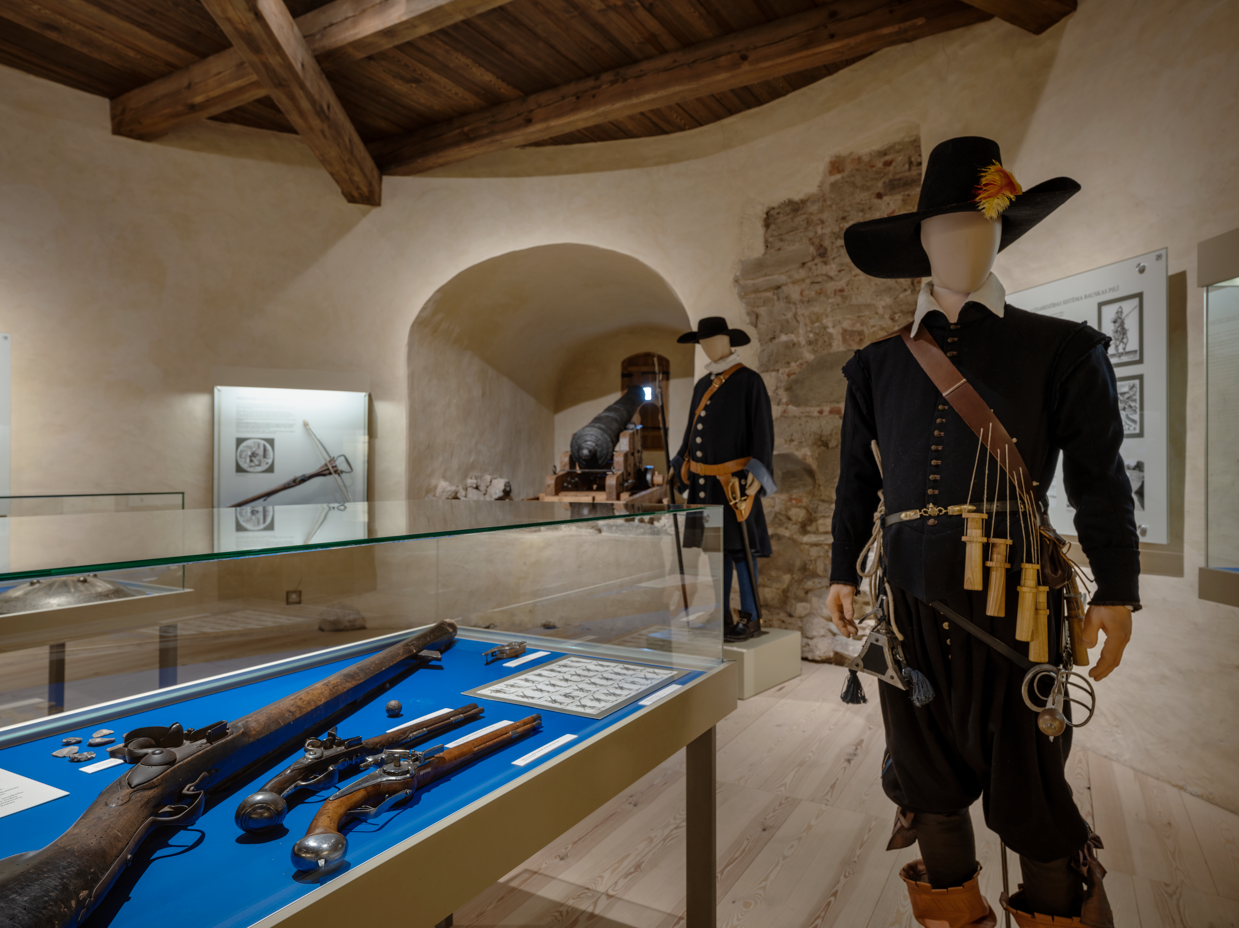
Exhibition “Bauska Castle – A Military Fortification”. Photo: R. Hofmanis, 2025
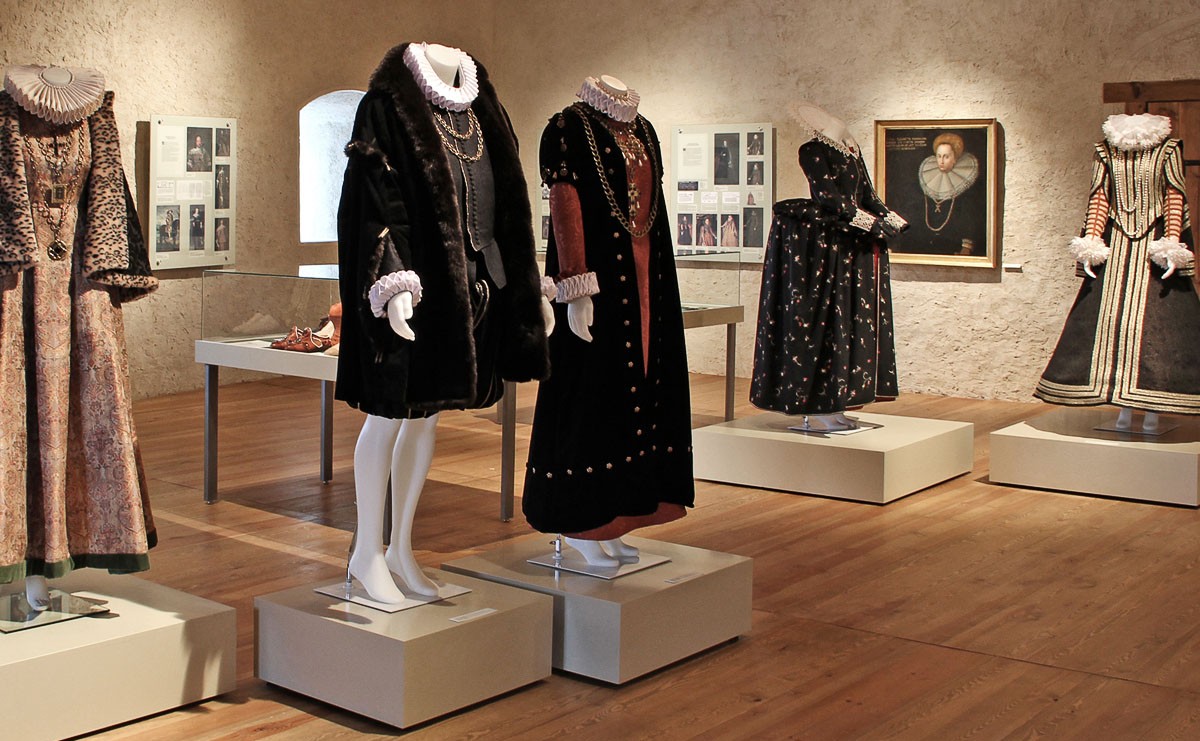
Exhibition “Dress and Jewellery in the Duchy of Courland and Semigallia (1561–1620)”. Photo: R. Hofmanis, 2025
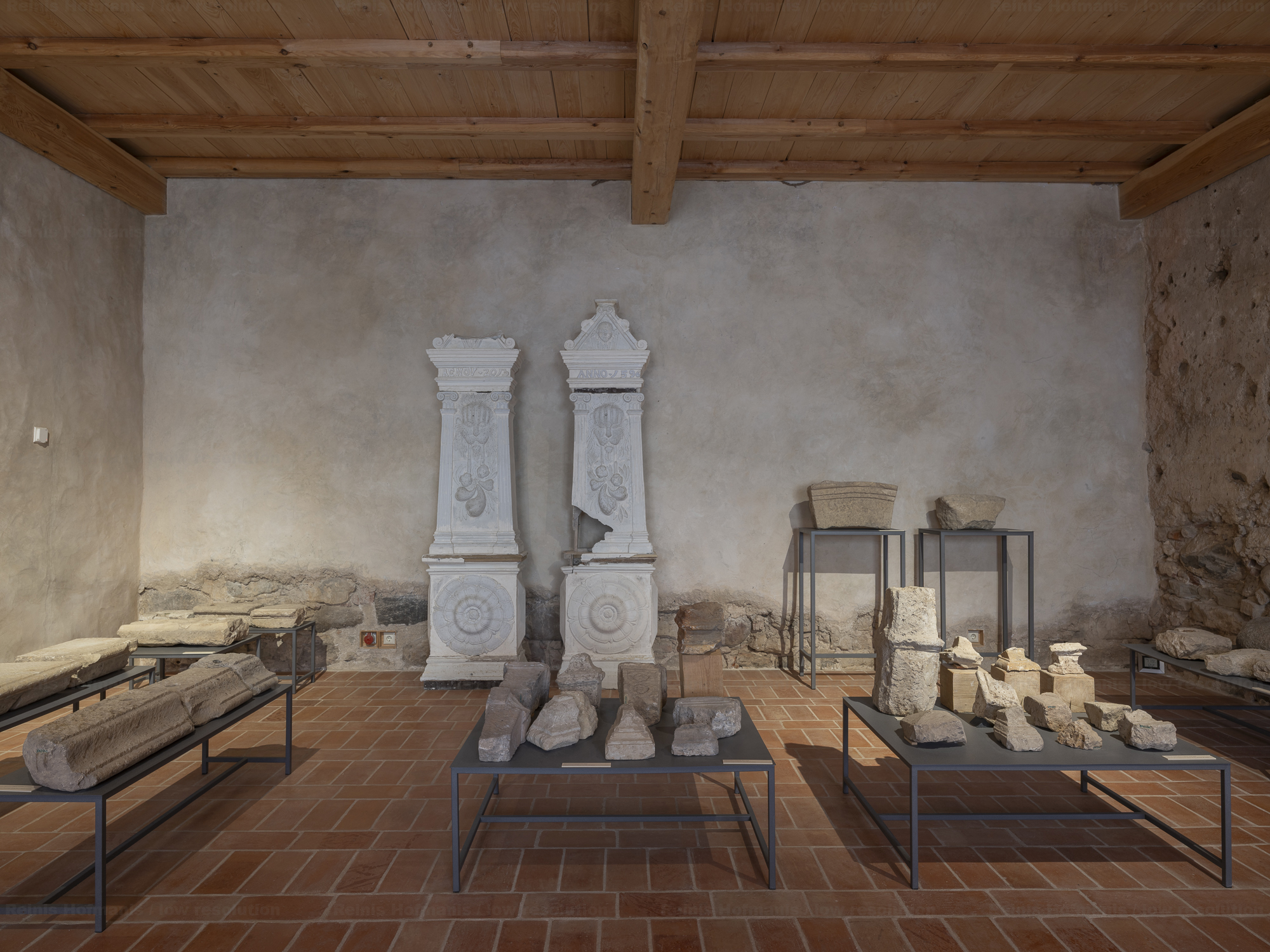
Exhibition “Collection of Decorative Stone Carvings at Bauska Castle”.
Photo: R. Hofmanis, 2025

Open-air military exhibition. Photo: R. Hofmanis, 2024


