Archaeology
The development of restoration projects for Bauska Castle is based primarily on materials obtained through archaeological excavations.
The first research at the ruins of Bauska Castle began at the end of the 19th century under the direction of the then owner of the castle, Count Paul Lieven. In 1880, part of the courtyard next to the northern wing was cleared of building rubble, revealing the foundations of a balcony and staircase, as well as several fragments of decorative stonework. Subsequently, some of the artefacts found in the castle ruins were transferred to the Courland Provincial Museum in Jelgava.
Thanks to the initiative of L. Liepa, director of the Bauska Museum of Local History and Art, during the second half of the 1960s the castle interiors began to be cleared of building rubble, and archaeological research was carried out near the northern wall. In the early 1970s, when reconstruction works on the ducal residence wing of the castle complex began, several rooms in the northern and eastern wings, as well as part of the paving in the New Castle courtyard, were cleared of building rubble. A large number of artefacts, fragments of decorative stonework, stove-tile fragments and pottery sherds were discovered.
In 1976, extensive archaeological excavations began at the castle and continued until 1992. In cooperation with the Bauska Museum of Local History and Art (later, with the Bauska Castle Museum, established in 1990), the research was carried out by historian Dr Andris Caune. From 1996 onwards, archaeological excavations were conducted over several seasons under the direction of Jānis Grūbe, a specialist at the Bauska Castle Museum. Excavations were carried out mainly in the ducal residence wing of the castle, the earthwork fortifications, as well as in the Order Castle section of the complex.
Research has established that, at the site of Bauska Castle on the banks of the Mēmele River, a fortified Baltic settlement existed during the Early Metal Age (around 1500 BC). The excavations revealed part of a sunken structure with a hearth, as well as bone dress pins and sherds of comb-decorated pottery. Individual artefacts dating from the Late Iron Age (10th–12th centuries) were also found, and a cultural layer containing sherds of handmade pottery was uncovered beneath the eastern wing. The location of the so-called “wolf pit” in front of the gates of the Order Castle was established. The excavations provided information about the eastern forecourt of the Order Castle; a two-room annex adjoining the eastern defensive wall and the remains of structures near the southern defensive wall were investigated. The research also clarified the layout of the ducal residence wing, the construction of the courtyard paving, the foundations of the balcony and staircase, as well as the dimensions and construction dates of the earthwork fortifications.
Archaeologists recovered 3,410 artefacts from the castle grounds, more than 16,000 stove-tile fragments and around 9,000 pottery sherds.
More than 300 coins were found. Most were minted in Riga and Livonian mints in the mid- and late 17th century, during the reigns of the Swedish kings Charles X Gustav and Charles XI and Queen Christina. Among the coins minted in the Duchy of Courland, Bauska Castle has yielded shillings struck during the reigns of Dukes Gotthard and Jacob. Coins of the Livonian Order, the Archbishops of Riga, the bishops of Dorpat and Ösel-Wiek, the Free City of Riga, Poland, Lithuania and Sweden dating from the 15th–17th centuries were also discovered, as well as ducats minted in the Netherlands at the turn of the 16th and 17th centuries.
The artefacts recovered can be divided into three groups according to their function – objects associated with military conflicts (a crossbow nut, crossbow bolt heads, cannon fragments, cannonballs and grenades, parts of musket and flintlock mechanisms, flints, iron and lead shot, etc.); samples of building materials and architectural details (stove tiles, decorative stonework, architectural metalwork, window glass and fragments of their frames, etc.); and tools and household objects (millstones, chisels, files, knives, spoons, a chess piece, a draughts piece, barrel taps, Dutch clay-pipe bowls and stem fragments, etc.). The most valuable collections are those of stove tiles dating from the late 15th to the early 18th century and decorative stonework dating from the late 16th century.
Materials from the archaeological excavations carried out at Bauska Castle in 1976–1982 are held in the Archaeology Department of the National History Museum of Latvia. Artefacts discovered in later research, as well as materials obtained before 1976, are held at the Bauska Castle Museum.
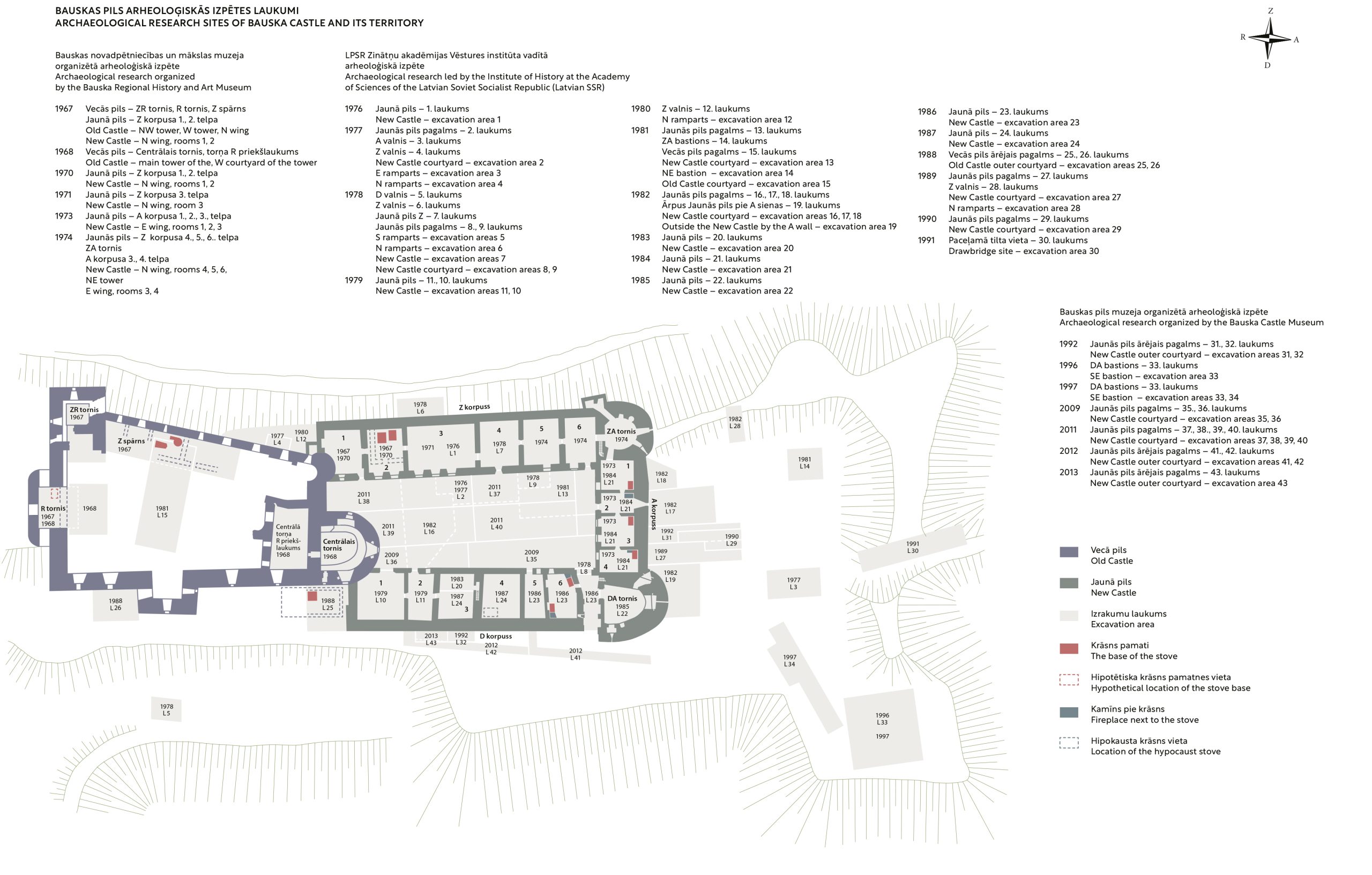
Archaeological excavation areas at Bauska Castle.
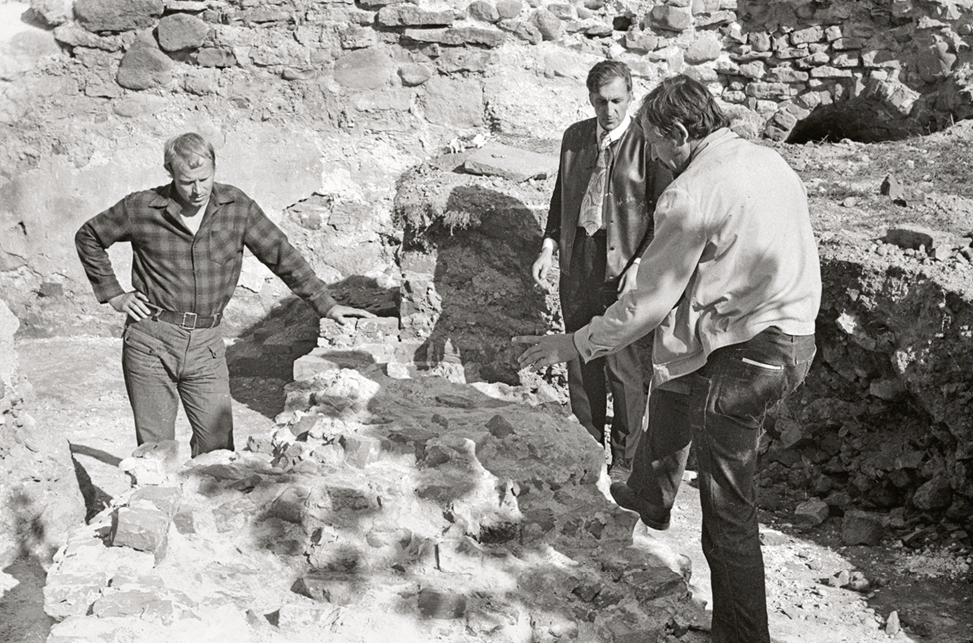
Archaeological excavations in the eastern wing of the ducal residence. From left: Māris Bērziņš, Laimonis Liepa, Mārtiņš Ruša. Photo: U. Eglītis, 1973
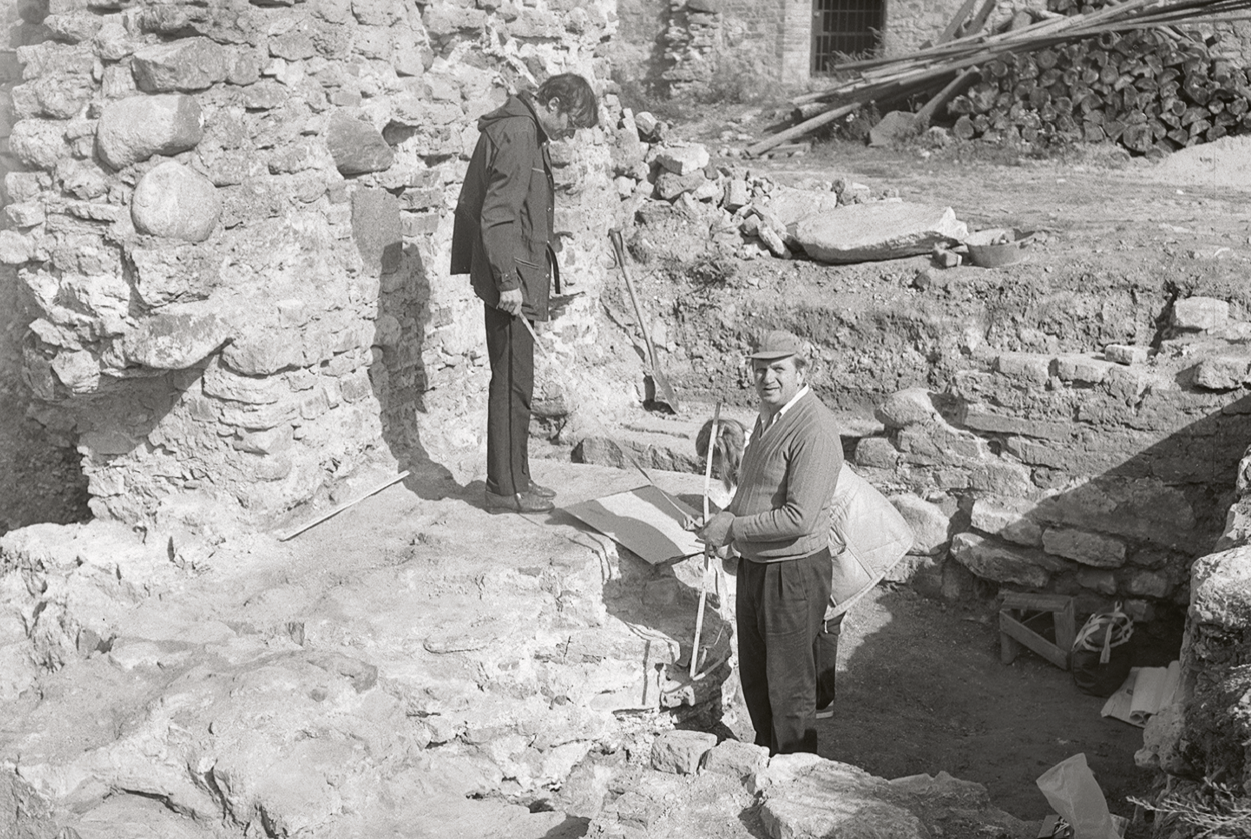
Archaeological excavations in the southern wing of the ducal residence. From left: Jānis Grūbe, Andris Caune. Photo: V. Leijere, 1987
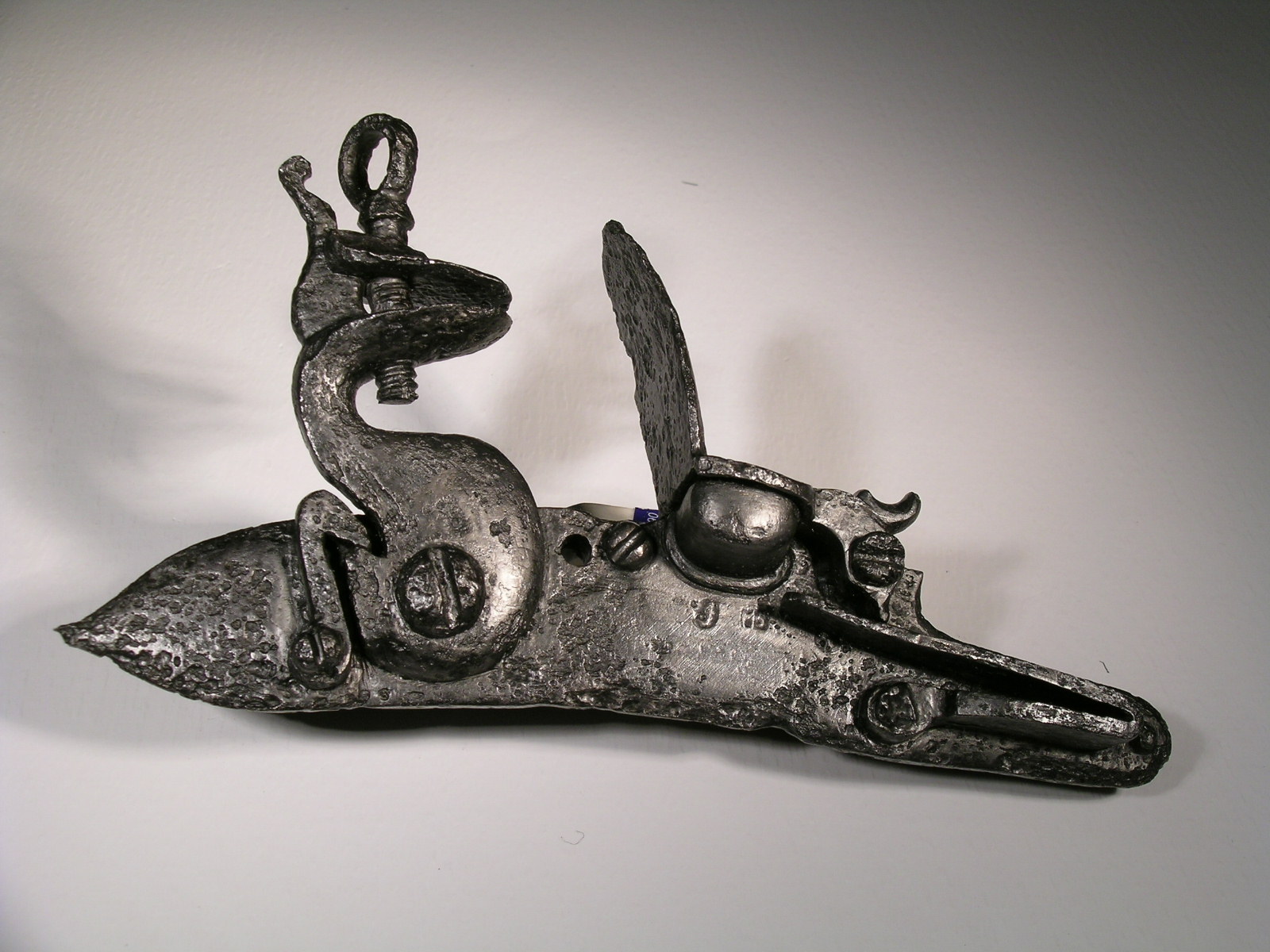
Flintlock firing mechanism of a firearm, 17th century. Found during archaeological excavations at Bauska Castle.
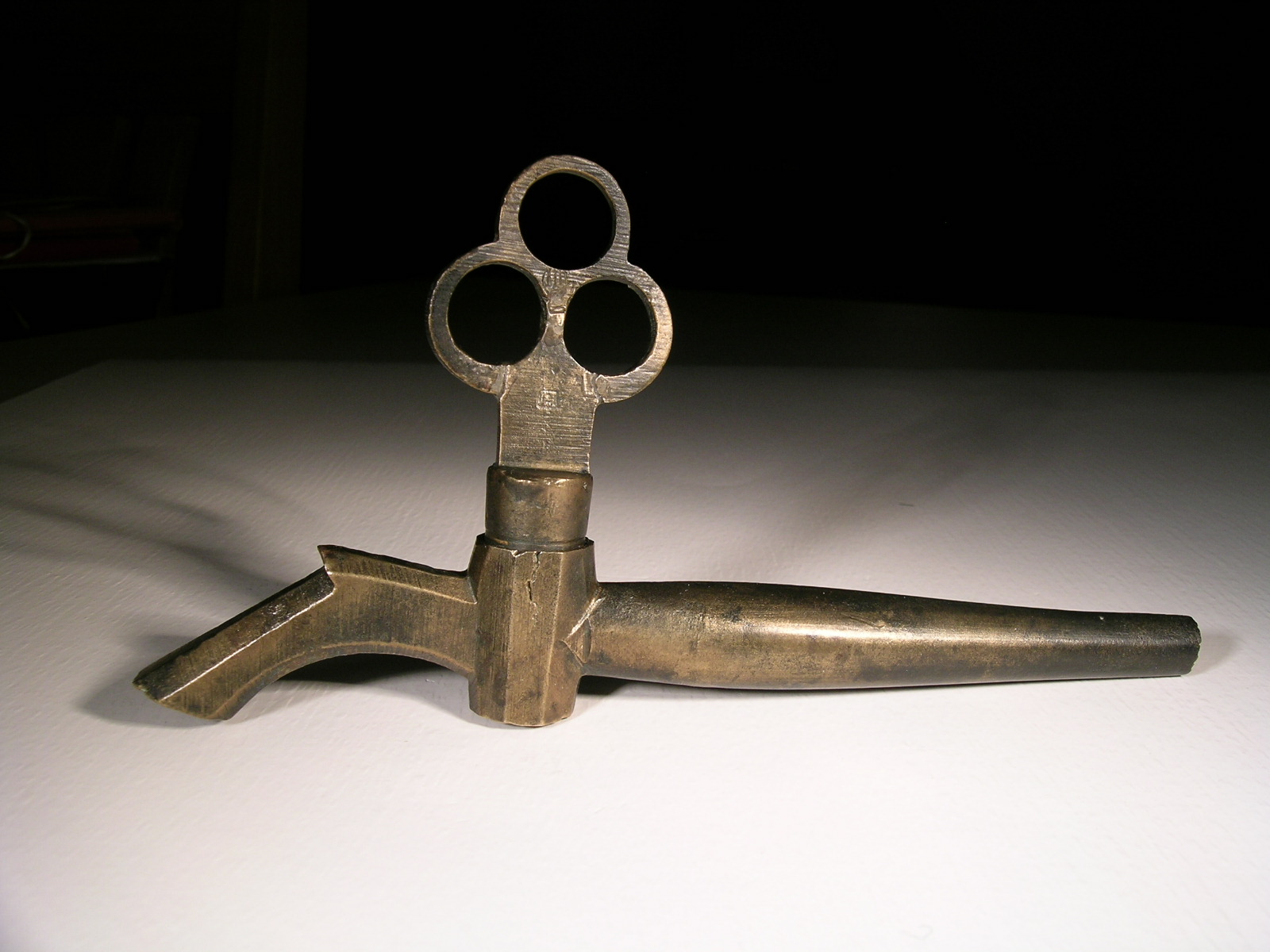
Barrel tap. 17th century.
Found during archaeological excavations at Bauska Castle.
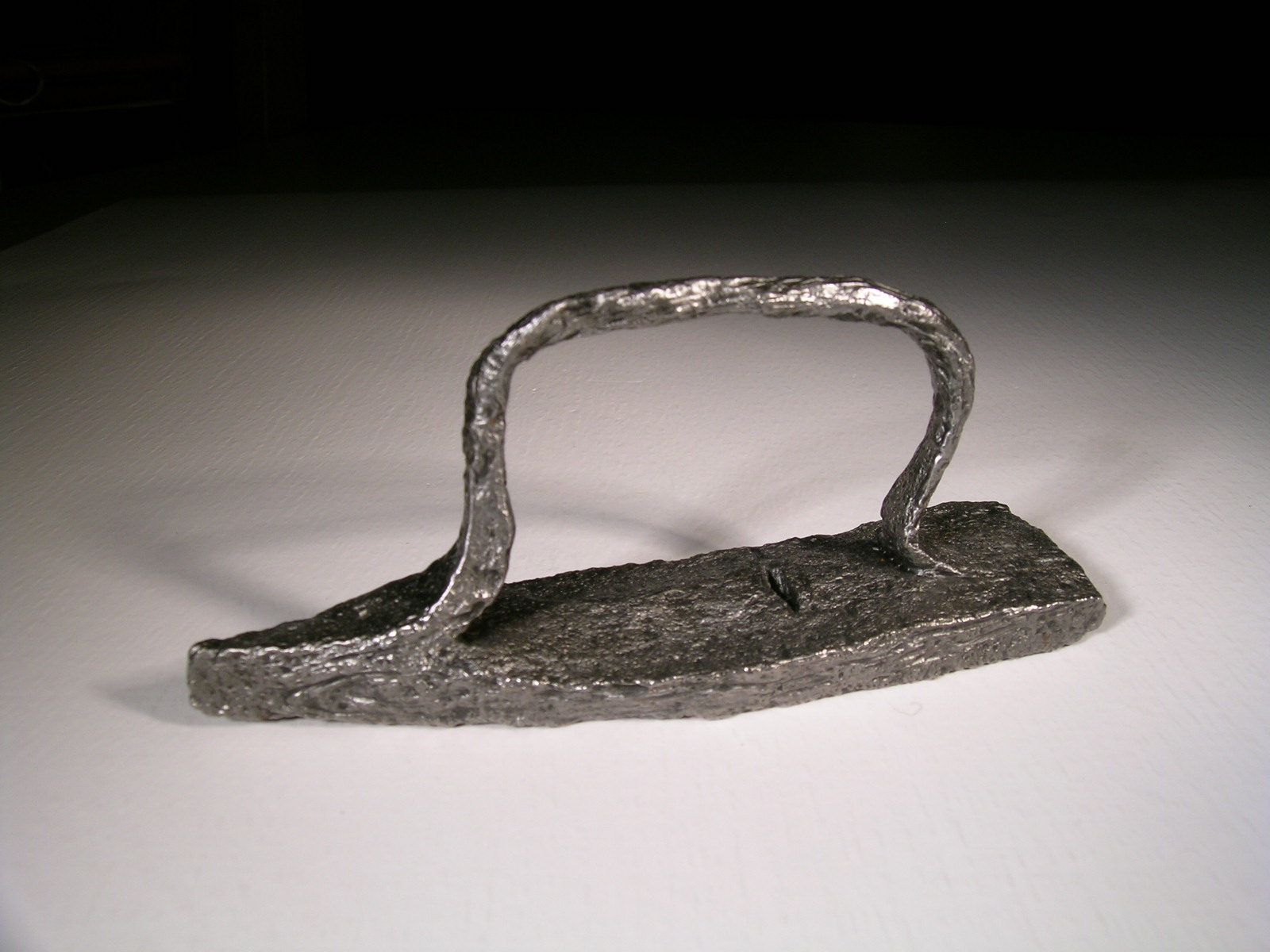
Iron clothes iron, 17th century. Found during archaeological excavations at Bauska Castle.


