The fortress and Vogt headquarters of the Livonian Order
The Livonian Order built the Bauska Castle in the middle of the 15th century with the aim to consolidate their power over Semigallia, to protect the border with Lithuania and control the trade route from Lithuania to Riga. The Bauska Castle was not only a fortification, but also a centre of a vogtei (a district of the order), from which the Vogt (a bailiff, reeve or advocate, an overlord (mostly of nobility) exerting guardianship or military protection) exercised his judicial, police, financial and military functions.
Not only local people, but also several hundred representatives of small Finno-Ugric tribes, who had been brought as prisoners of war from Russia, participated in the construction of the Bauska Castle. The protocol of visits of the castles of the Order of 1451 mentions the Brothers Knights Heinrich Bekenferde von Schungel, Heinrich Leve and Heinrich von Frisendorf, and two priests living in Bauska Castle.
Between 1536 and 1538, Burcard Waldis, an advocate of the ideas of Martin Luther, was imprisoned in the Bauska Castle prison, where, as well as later in Cesis (Wenden) and Viljandi (Fellin) Castles, he translated several psalms from Latin into German.
At the outbreak of the Livonian War, on 31 August 1559, a defence treaty was signed by Master of the Livonian Order Gotthard Kettler and Polish Chancellor Nicholas Radziwill in Vilnius. Following this treaty, the Polish–Lithuanian Commonwealth pledged to present troops at the disposal of the Livonian Order to fight Russia. In return, the Livonian Order had to temporarily transfer some frontier provinces and castles into ownership of the Polish-Lithuanian Commonwealth. The Bauska Castle was transferred to the King of Poland in December 1559. In 1561, the last Archbishop of Riga, Wilhelm von Brandenburg, acquired the Bauska Castle from the Poles in exchange for the Koknese Castle.
Duke’s residence and court
The Duchy of Courland and Semigallia was established by the document known as Pacta subiectionis (Provisio ducalis), the treaty of obedience to the Grand Duchy of Lithuania signed on 28 November 1561. The treaty was ratified in March 1562, with the Livonian Order secularisation ceremony taking place in Riga Castle; however, as a secular duke, Gotthard Kettler swore an oath of allegiance to the King of Poland and Grand Duke of Lithuania Sigismund II August and became his vassal.
At the end of 1562, the castle was transferred to the Duke of Courland Gotthard. The extant documents indicate that between 1564 and 1567 the duke often used to stay in the Bauska Castle. In 1568, 1590 and 1601, there took place three Duchy parliaments (landtags), or meetings of the delegated landlords, where political and economic issues important to the new state were resolved. There are also extant documents attesting to the successive visits of Duke Friedrich to the Bauska Castle from 1590 to 1603.
The Bauska Castle served as a place for the Bauska Court, which was ruled by the castle master. He had to take care of the castle and make sure that the castle had enough weapons and ammunition. The master judged criminal cases against townspeople. He had to take care of the Duke’s property in his area and also carry out various police activities such as overseeing roads, fishing grounds, forestry, etc. For his work he received both money and a payment-in-kind from manors in the form of firewood and hay. The master of Bauska had 16 crown manors under his control.
Polish-Swedish Wars
In the first half of the 17th century, there was a military conflict on the coast of the Baltic Sea, which is known in historical literature as the Polish-Swedish Wars. The real cause of the wars was the struggle for hegemony over the Baltic Sea coast. After the Livonian War, almost the entire eastern coast of the Baltic Sea fell into the hands of the Polish–Lithuanian Commonwealth.
In summer 1621, threatened by the Swedes, the court of Duke Friedrich moved from the Jelgava Castle to the Bauska Castle, where it stayed until the end of the year. In summer 1625, the Swedish troops went via Koknese and Selpils to Birzai, Lithuania. From Birzai, the Swedish troops returned to Riga, then in the middle of September came to Bauska and began the siege of the castle. As mentioned in several letters written by Duke Friedrich in autumn 1625, the Swedish troops struck at the defence wall several times, but to no avail. Only using the help of the Bauska townsman Gotthard Hunt the Swedes managed to enter the castle through the window of the castle’s master suite, and then the garrison surrendered. The Bauska castle master Magnus Butler was fatally wounded while defending the castle gate, and several landlords of the Bauska area were “killed in the first frenzy”. The Polish-Lithuanian troops surrounded the castle several times in 1627 and 1628, but only on 28 May the Swedish garrison surrendered. The castle fell into the hands of Polish-Lithuanians, who delayed returning the castle to the representatives of Duke Friedrich until the beginning of 1630, when the castle was taken over by Christopher von Fircks, the Chancellor of the Duchy.
In 1635, Duke Friedrich approved the rules for the Bauska town police. They mentioned that in the event of an enemy attack, the townspeople are required to come to the castle with their weapons and to serve as its guards. At the time, the garrison of the Bauska Castle housed musketeer and dragoon battalions of 100-150 people each.
In 1650 and 1652, Bauska Castle inventory protocols were drawn up. Apart from the descriptions of the castle premises, they also mentioned weapons and ammunition stored in the castle, including 48 muskets, 1 sword, 136 pikes and 20 half-pikes. Judging by the text of the protocol, in the middle of the 17th century, the modernisation of the castle fortifications was completed. The renovation of the castle and the modernisation of fortifications cost the State Treasury 12 thousand state coins (ducats).
Having gained the throne, Duke Jacob sought to continue the policy of the Duchy’s neutrality established by Duke Friedrich. However, in the face of Swedish superiority he had to make concessions. In 1655, in Pasvalys, officials of the Duchy of Courland and Sweden concluded an agreement stipulating that the Swedes would be able to station a garrison in the Bauska Castle, should the necessity arise. The representatives of the Duchy hesitated to hand over the castle, moreover, the townspeople complained to the Duke about the demand of the Bauska master for the landlords to attend the guard service at the castle whenever Swedish troops appeared nearby. On 10 October 1658, Swedish troops occupied the Jelgava Castle and forced Duke Jacob to hand over the Bauska Castle too. A cavalry unit led by Lieutenant-General Frits Leve was sent to Bauska, and on 12 October, the Swedish garrison was already in the castle. The Swedish Commandment allowed the possessions of the townspeople to be kept in the castle, which could be released at the request of their owners. In the second half of 1658, there were clashes between Polish – Lithuanian and Swedish troops near the Bauska Castle. Following the conclusion of the Treaty or Peace of Oliva in May 1660, intense negotiations were held on the fate of the Bauska Castle. The Polish-Lithuanian Commandment tried to station its garrison in the castle. Under the pretext of an earlier agreement with Duke Jacob, the Swedes were interested in handing over the castle to the Duke. In mid-July, negotiations came to the point where the Swedes agreed to hand over the Bauska Castle to Polish-Lithuanian troops, on condition the Duke’s representatives take part in the transfer. Before leaving the castle, the Swedes compiled a list of weapons and ammunition stockpiles in the castle. There were 18 cannons, 2 mortars, 3 howitzers and 28 operable muskets. The castle was handed over to the Duke’s officials against a payment of 10,000 ducats only at the end of August.
In 1665, the garrison of the castle had one infantry squadron and a cannon unit (about 150 people). At the end of the 17th century, masters of Bauska and governors of the Bauska crown manors repeatedly appealed to the duke for money and building materials for the renovation of the castle. Still, the castle inventory report of 1698 states that most of the castle premises are unsuitable for living and the roof is rotten. The land fortifications of the castle were in a bad condition too.
At the end of 1698, Wilhelm Christoph Ringdemut was appointed the commandant of the castle garrison, at that time counting 70 men. In summer 1699, the soldiers of the castle garrison were given new uniforms and equipment.
Great Northern War, the Castle ruin
After the beginning of the Great Northern War, the Duchy of Courland was irrevocably dragged into the vortex of war. To ensure the protection of the Duchy, Duke Ferdinand tried to organise feudal troops. In summer 1700, the duke ordered castle masters to keep a register of combat-capable men and weapons. On 15 June, the commandant of the Bauska Castle garrison also received such an order. The decree stipulated that the governors of the surrounding Duke’s estates should send people not only to the garrison but also to repair the castle fortifications.
After the victory at the Battle of Spilve on 9 July 1701, Swedish troops entered the territory of the Duchy and occupied Jelgava in the evening of 12 June. King Charles XII of Sweden sent Lieutenant Colonel Johann August Meyerfeld with 500 horsemen to capture Bauska. The Bauska Castle garrison surrendered on 22 June. The main forces of the Swedes together with the King arrived in Bauska on 26 July, but on 1 August the Swedish army left, leaving the infantry regiment under Nils Pose as the castle commandant, and 300 dragoons under Major Johann Reinhold von Trautfetter, as well as several hundred ill soldiers.
From autumn 1701 to end-1702, the castle underwent a modernisation of fortifications under the command of Lieutenant Marten Krammeker. The troops of the castle garrison were kept on the alert by the troops assembled by Samogitian headman Grigory Anton Oginsky and Prince Mikhail Sevaciy Koribut Vishnevsky, who were opponents of Swedish supporters. The castle was not damaged, but the delivery of the provision (food) from the manors surrounding the castle was significantly delayed. The composition and number of the castle garrison was constantly changing. If in 1702, the regiment counted 619 soldiers, then in 1703, there were only 324 combat-capable men. In 1705, the infantry regiment was transformed into a battalion.
In summer 1705, the Russian troops launched an offensive against the Swedes. In August, the Russians captured Jelgava, and in September, they sent two infantry and one dragoon regiments and an artillery unit to Bauska. After intense artillery fire, the Swedes proposed the start of peace talks, the negotiation culminating in signing a capitulation act. The Russian troops entered the Bauska Castle on 14 September. Shortly after the castle was occupied, a list of weapons and ammunition was drawn up. It showed that in the castle there were 46 cannons, 4 mortars, 8 howitzers and 370 muskets with a big amount of various ammunition, namely, a variety of cannon balls, grenades, so-called cannon shots and powder.
According to the agreement, the Swedes were released with honour, i.e. with weapons and flags. With drums beating, they were accompanied by 50 Russian dragoons till they reached Riga on September 19. The Russian troops remained in Courland until the beginning of April 1706. On 13 April, the Bauska Castle was also abandoned, having been partly blown up. After 23 June, the Swedish presence was again recorded in the Bauska Castle. Although the castle had been seriously damaged, it was still used as a storehouse for supplies, fodder (for horses) and hay. A small number of soldiers also stayed in the castle.
After the devastation of the Northern War, the Bauska Castle was no longer used as a military fortification or as a dwelling house for the governor. The fields and meadows of the manor were on the opposite bank of the Musa River, where a complex of manor buildings with the manor house in the centre had already been built in the middle of the 17th century. Gradually the castle turned into romantic ruins.
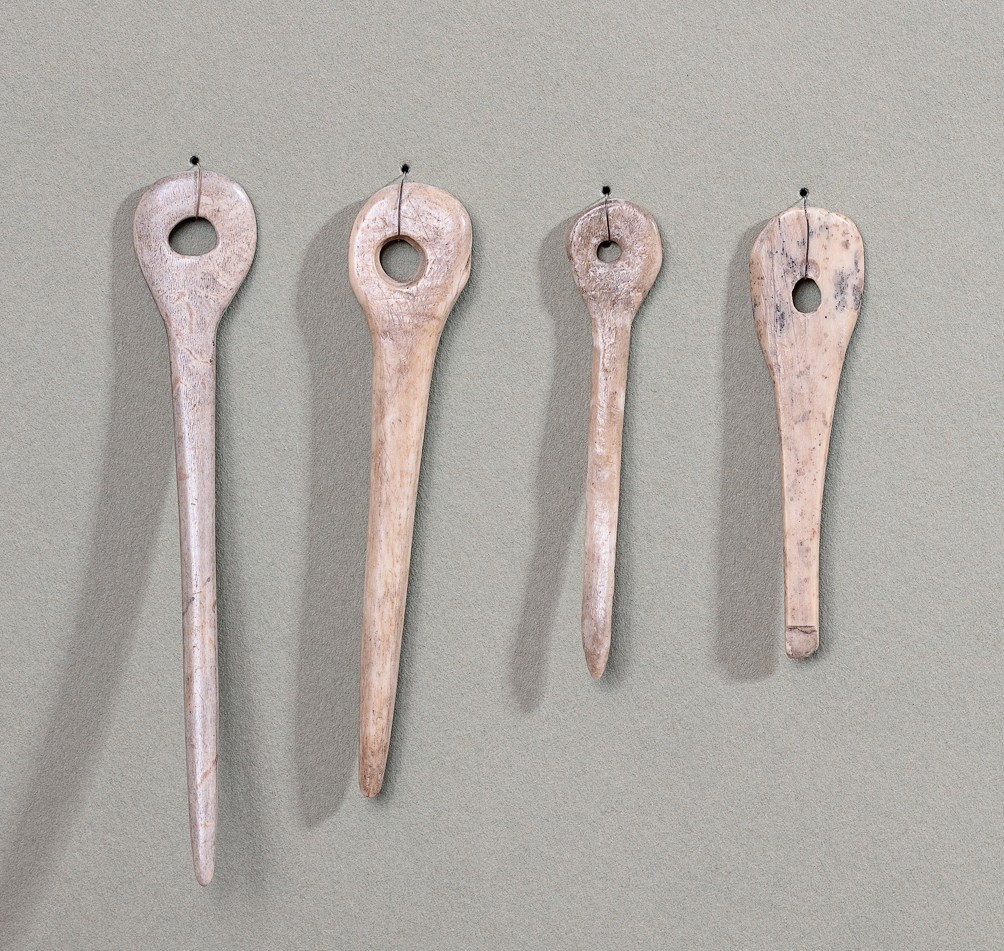
Bone needles. Early Metal Age (mid-2nd millennium BC–2nd century AD). Found during archaeological excavations at the site of a Baltic settlement near the northern wall of the Bauska Castle ruins. Photo: R. Hofmanis, 2025.
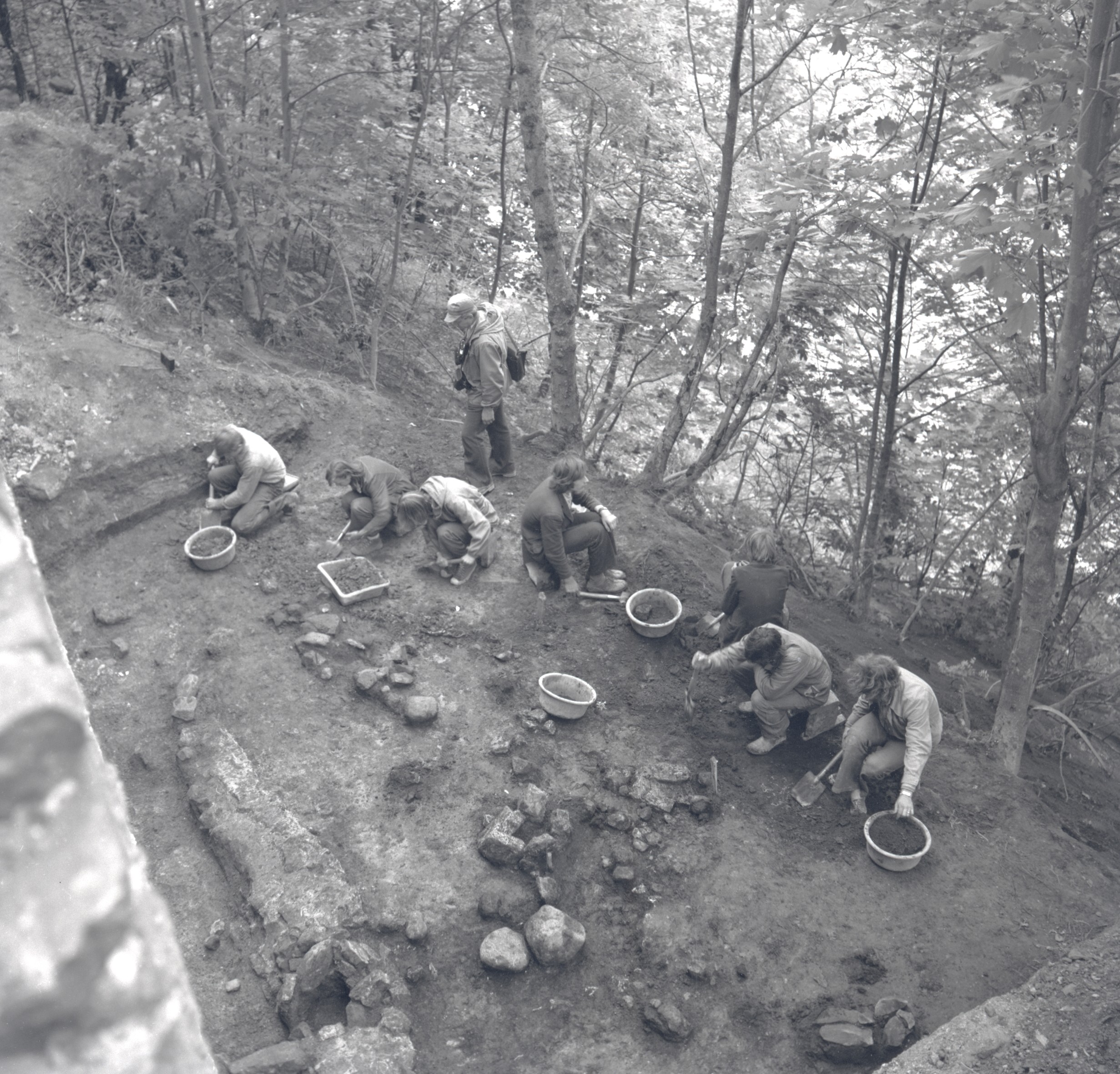
Baltic settlement uncovered during archaeological excavations near the northern wall of the Bauska Castle ruins. Early Metal Age (mid-2nd millennium BC–2nd century AD). Photo: V. Leijere, 1977.
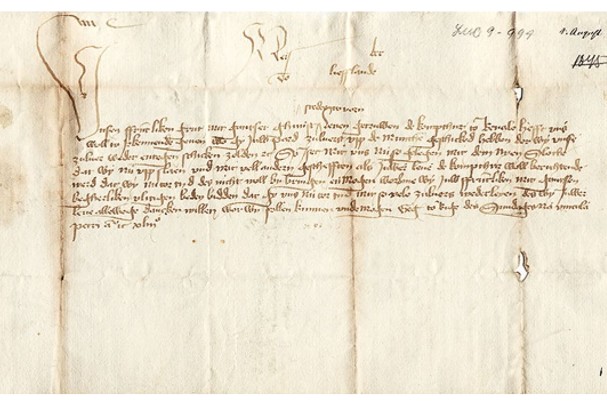
Letter from Livonian Order Master Heidenreich Fincke von Overberg to the Reval City Council. The earliest written evidence of the construction of Bauska Castle. Tallinn City Archives.
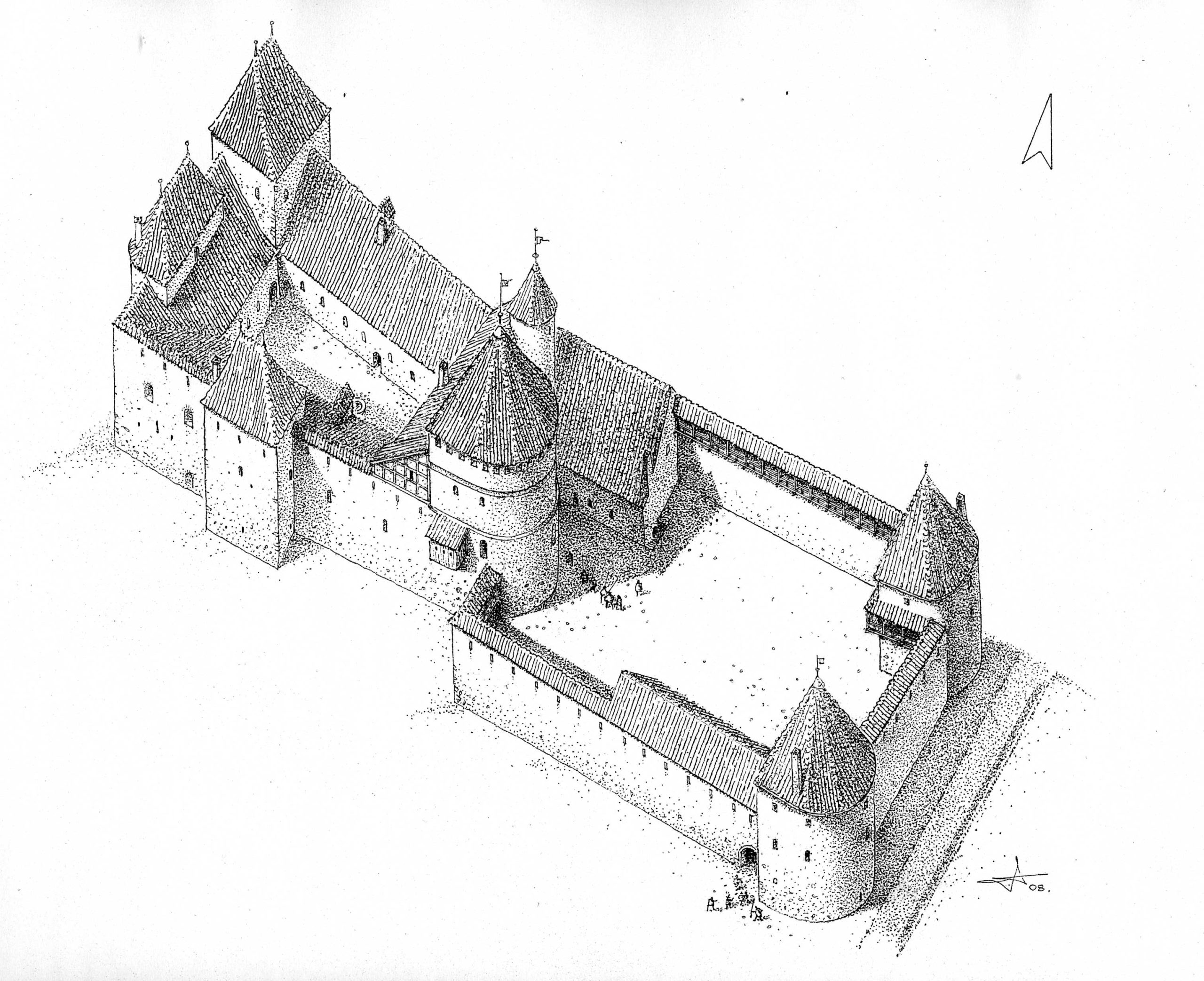
Gunārs Jansons. Bauska Castle in the early 16th century. Reconstruction drawing, 2008.
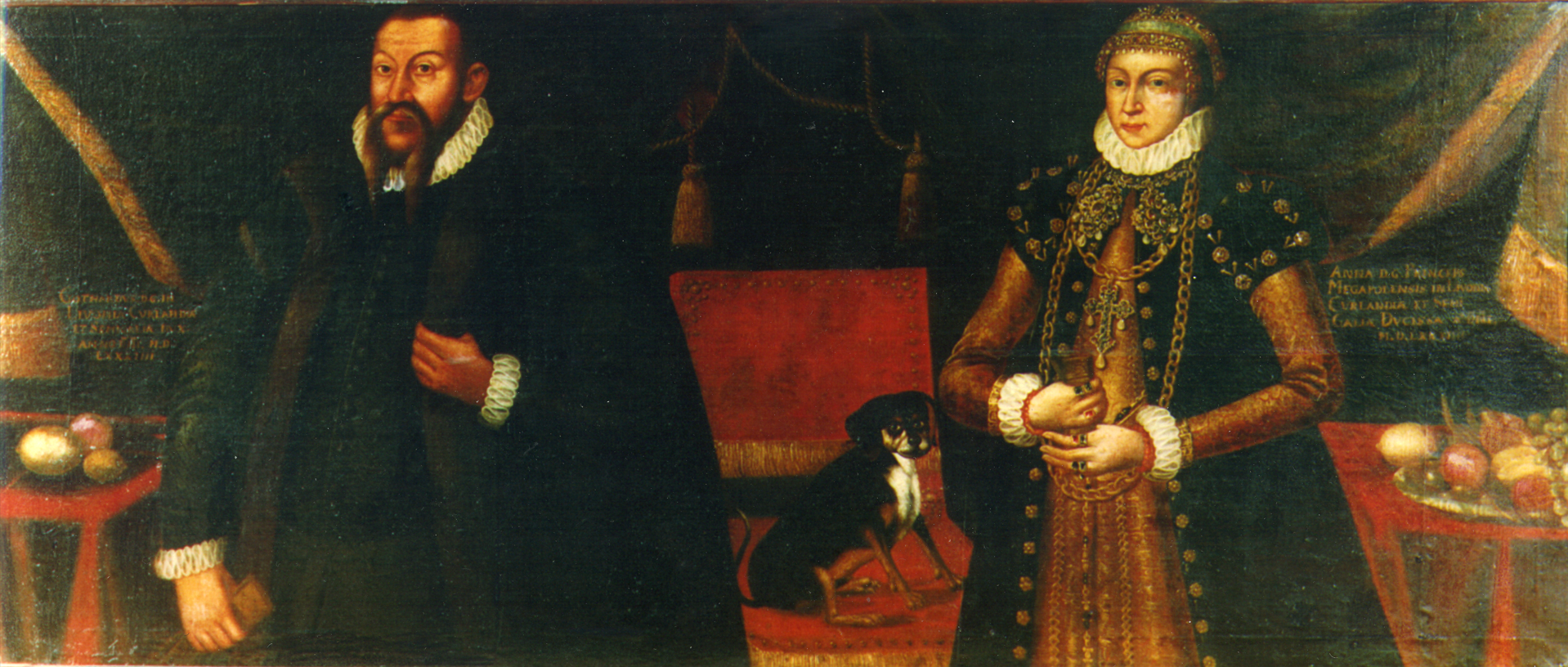
Unknown artist. Portrait of Gotthard, Duke of Courland and Semigallia, and Duchess Anna. Private collection, Hofeštates Castle, Germany.
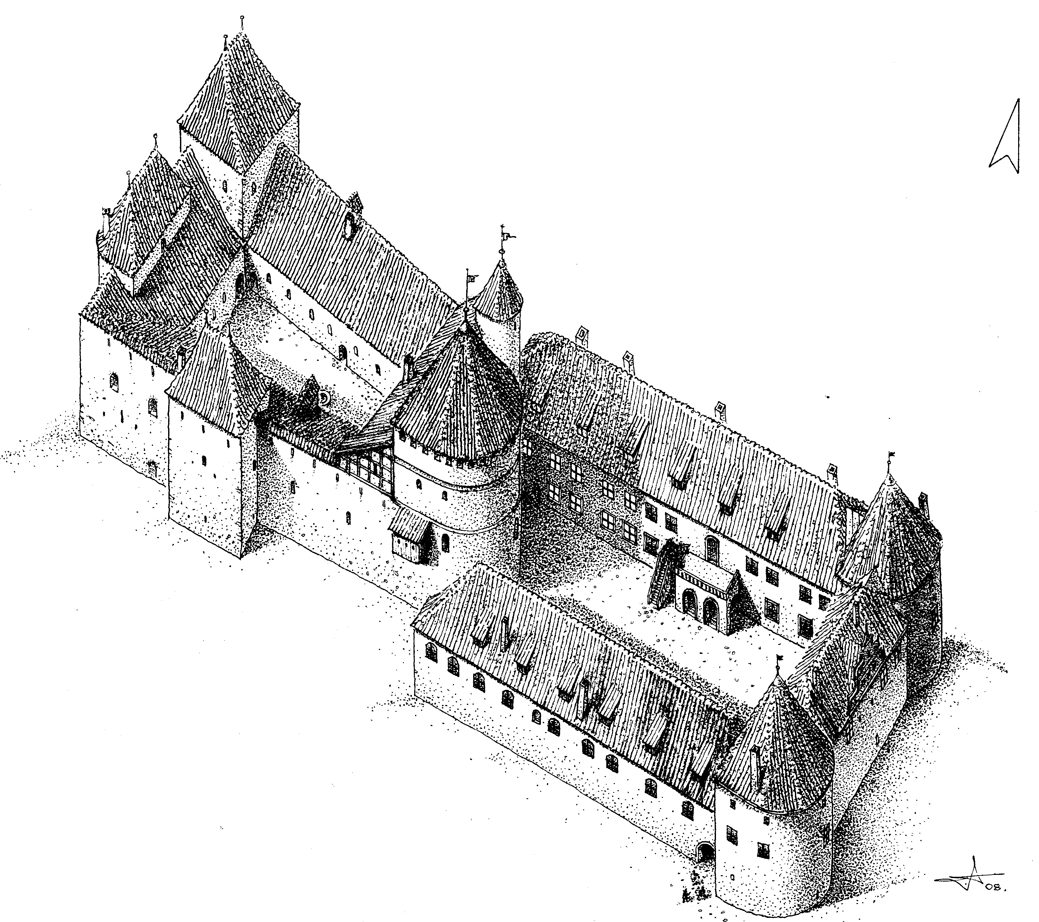
Gunārs Jansons. Bauska Castle in the late 16th century. Reconstruction drawing, 2008.
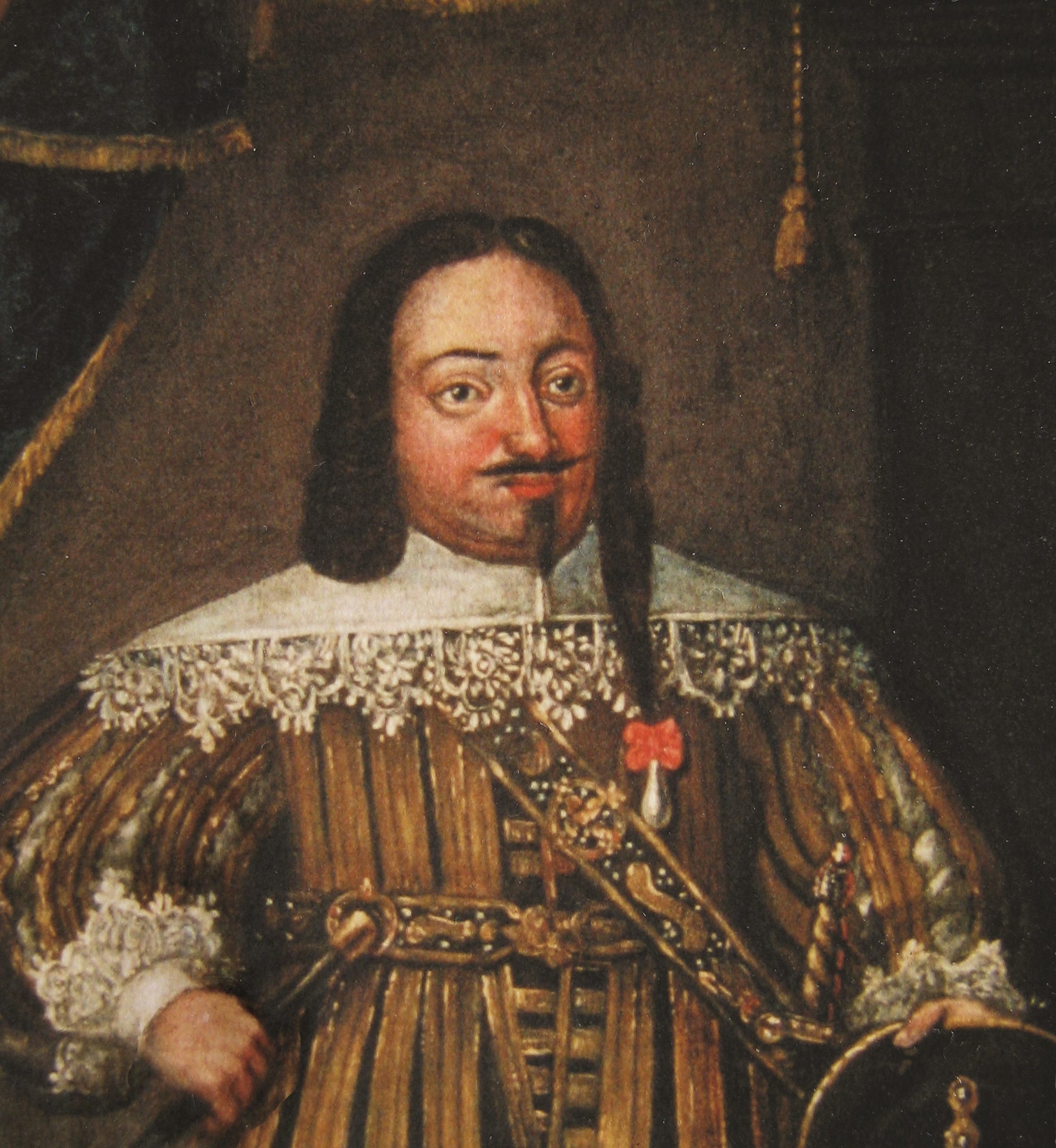
Johann Christian Hohl. Portrait of Frederick, Duke of Courland and Semigallia. 18th-century copy. District Museum in Toruń, Poland.
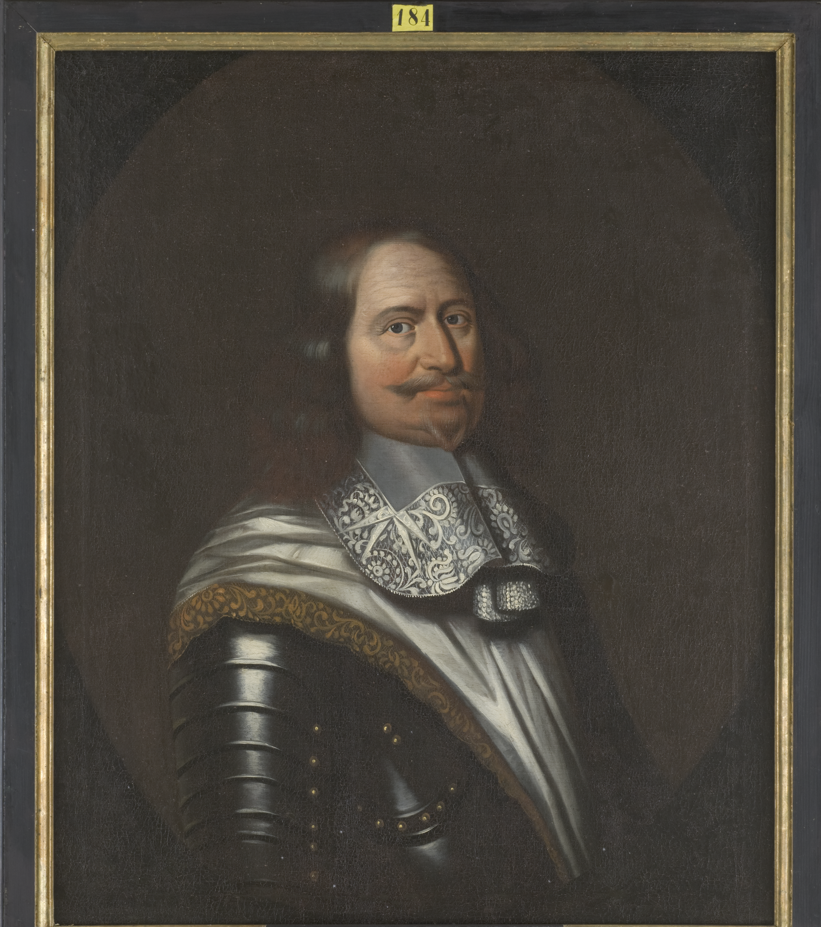
Unknown artist. Portrait of Jacob, Duke of Courland and Semigallia. c. 1645–1655. Swedish National Portrait Collection, Gripsholm Castle, Sweden.
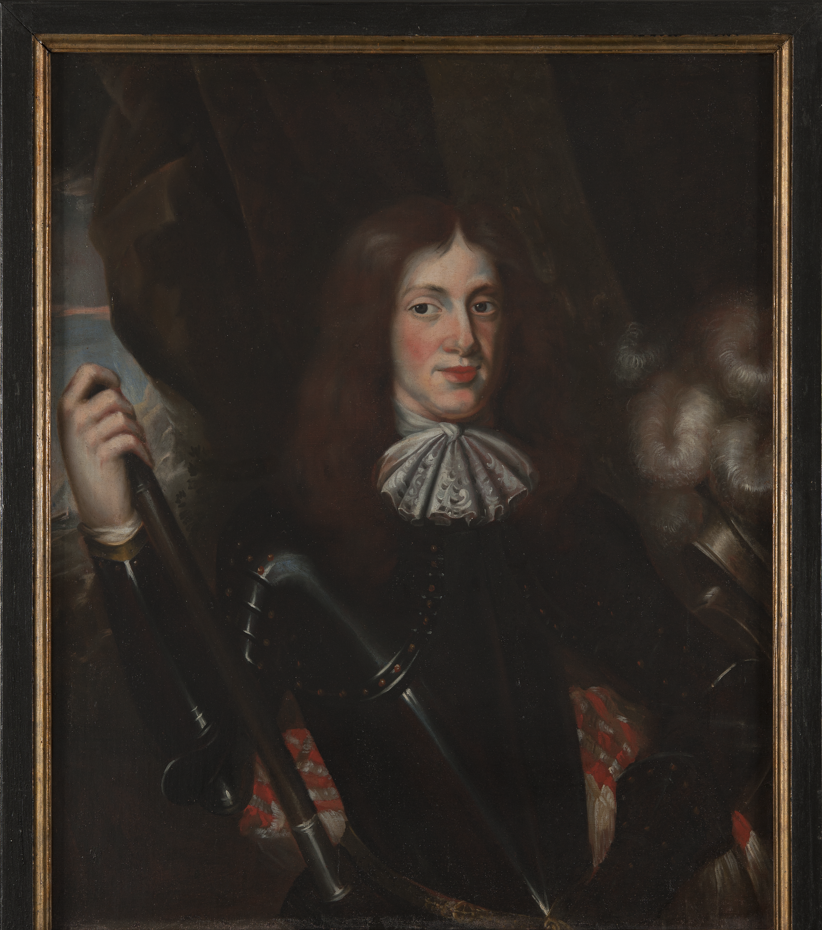
Unknown artist. Portrait of Frederick Casimir, Duke of Courland and Semigallia. c. 1670–1680. Swedish National Portrait Collection, Gripsholm Castle, Sweden.
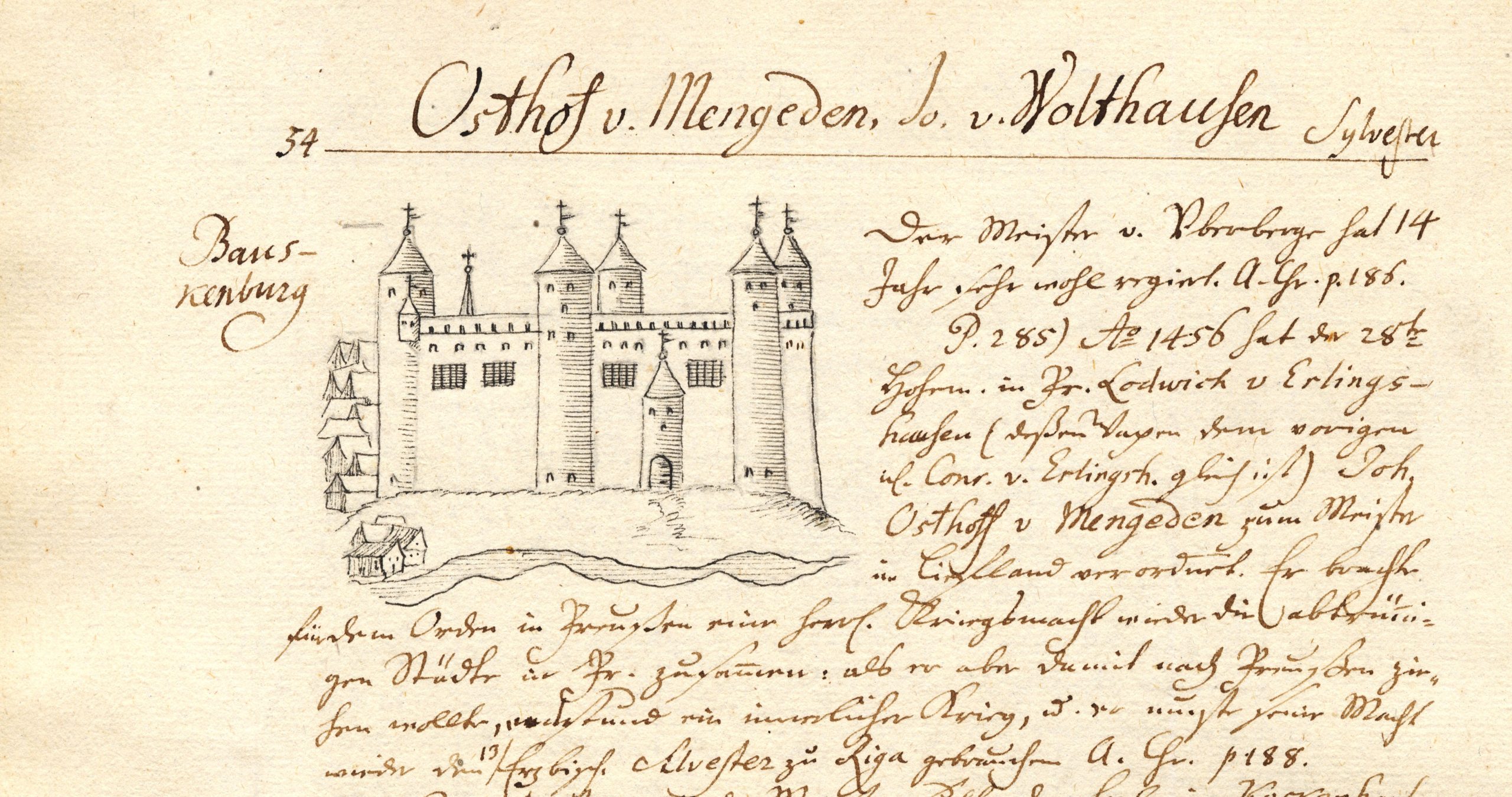
Depiction of Bauska Castle in a copy of Johann Christoph Brotze’s chronicle, c. 1771. Academic Library of the University of Latvia.
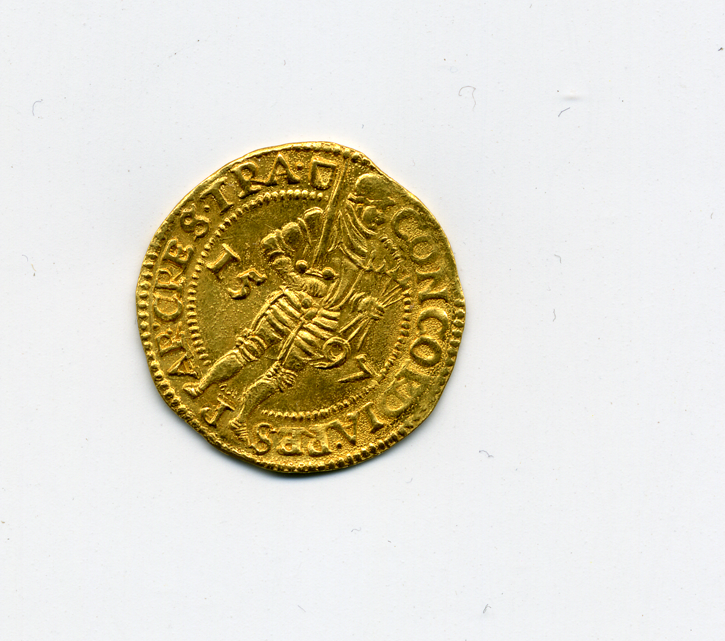
Utrecht gold ducat. United Provinces of the Netherlands, 1597. Found during archaeological excavations at Bauska Castle in 1974.
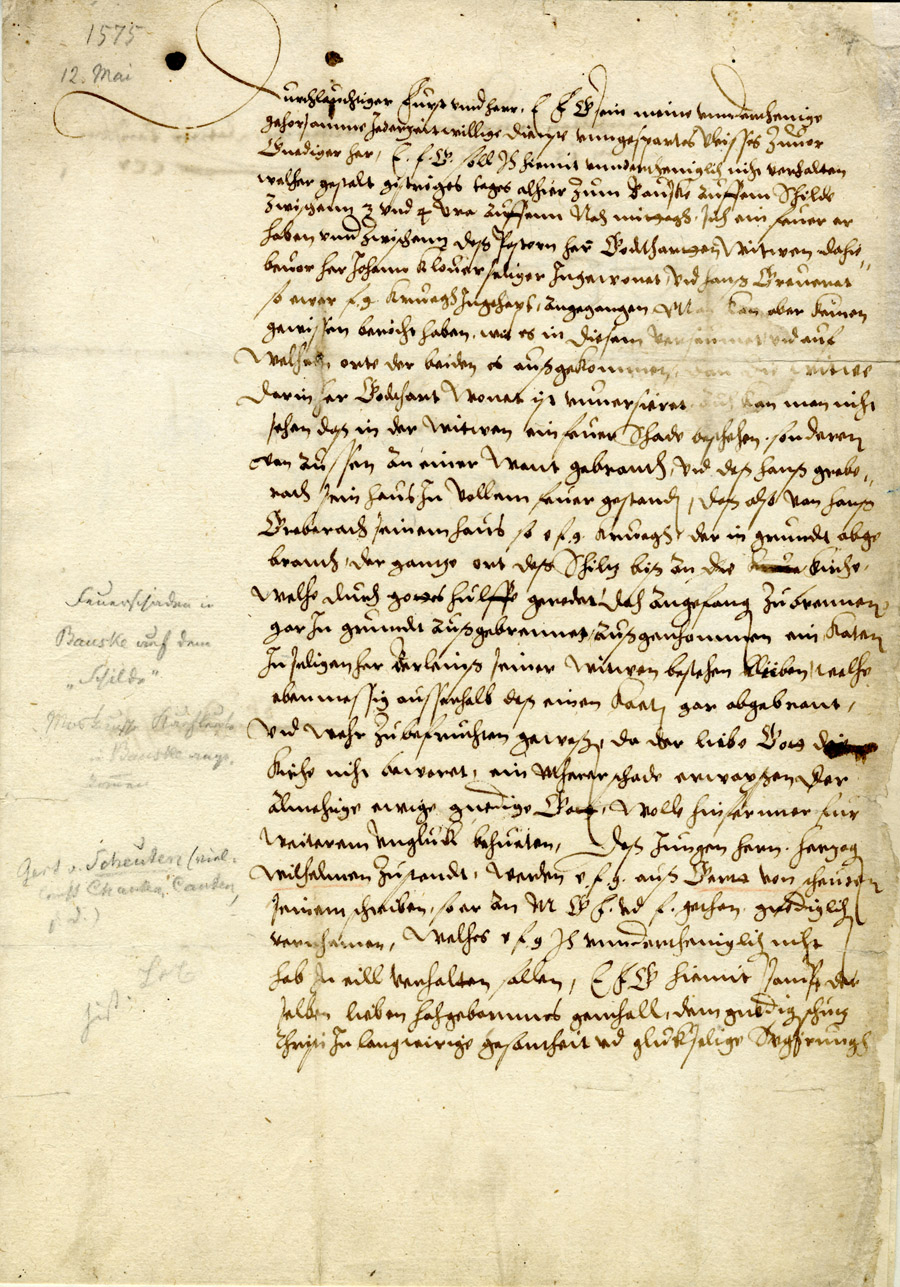
Letter from Georg von Rosen, Governor of Bauska Castle, to Duke Gotthard concerning the fire in Vairogmiests near Bauska Castle. Latvian State Historical Archives.
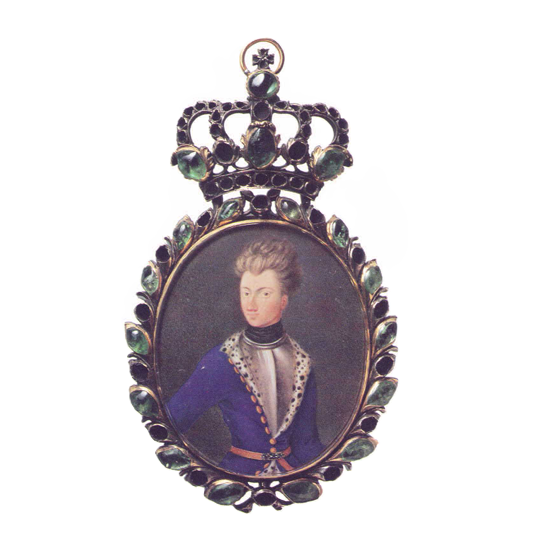
Axel Sparre. Portrait of King Charles XII of Sweden. Painted in Bauska. Image published in the catalogue Sweden: The Royal Treasury, 1550–1700. National Gallery of Art, Washington, 1988.
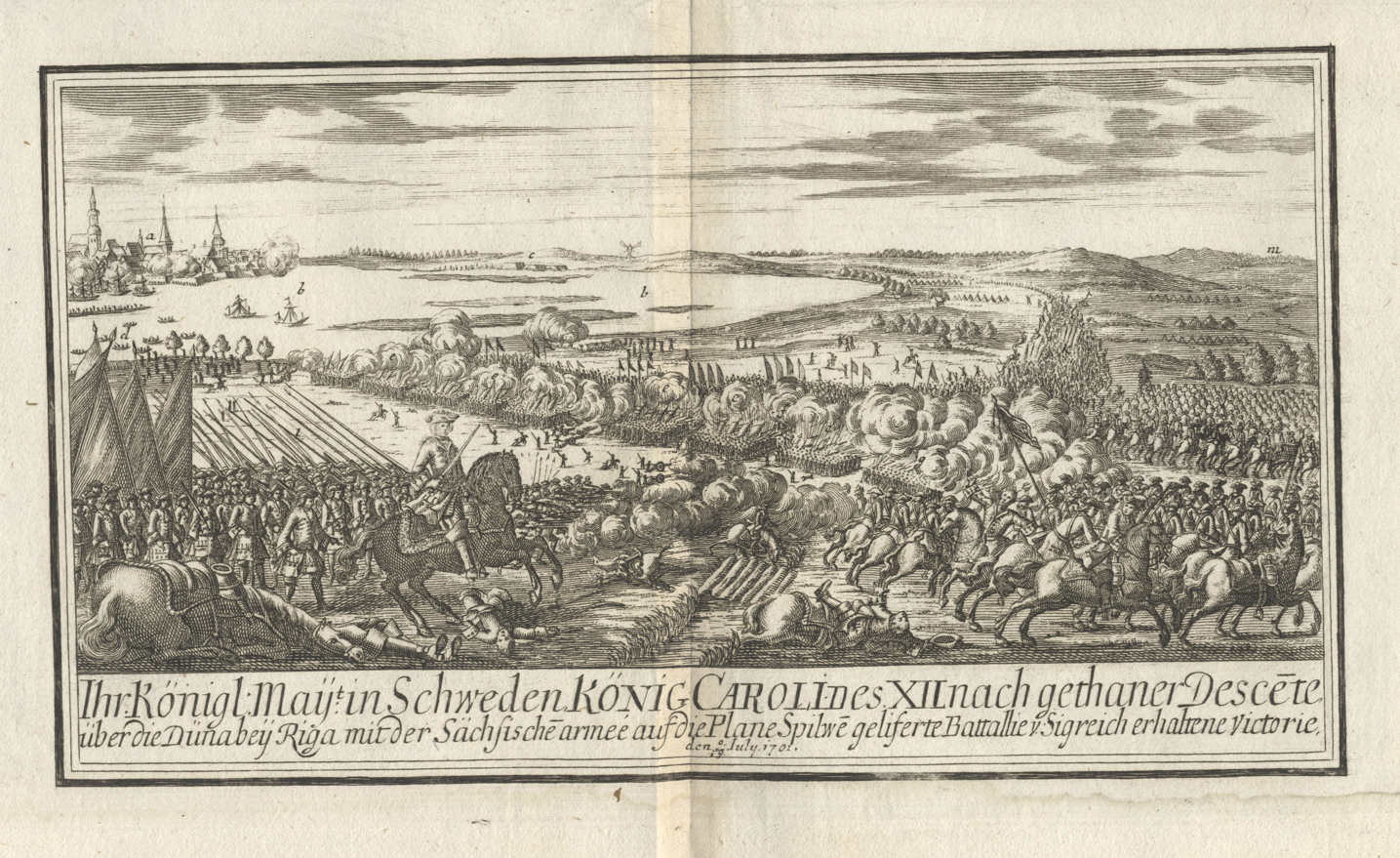
Johan Liten. The Battle of the Great Northern War in the meadows of Spilve near Riga. Engraving published in Effigies Corporis et Animi Caroli XII, 1707. National Library of Latvia.
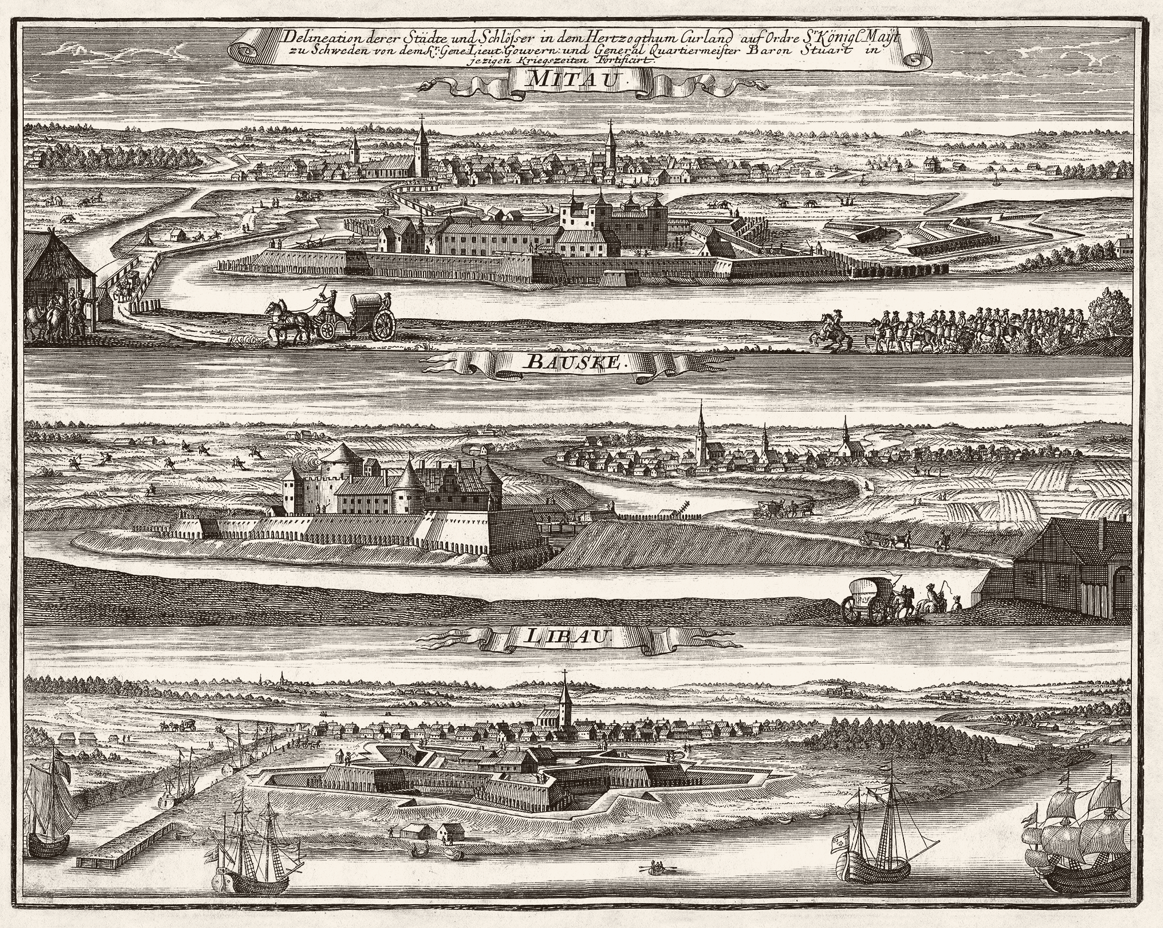
Views of Jelgava, Bauska and Liepāja. Engraving in Samuel Faber’s book Der Ausführlichen Lebens-Beschreibung Carls des XII. Königs in Schweden. Frankfurt am Main and Leipzig, 1705.


